

The UK government announced this Saturday (24) a package of approximately £600 million aimed at artificial intelligence safety, biosecurity, cyber defense, and technological development. The largest single initiative will be a laboratory that will use AI to detect biological threats and support the creation of responses against new pathogens.
The suite of measures was presented by HM Treasury ahead of the budget scheduled for next week. According to the official announcement, the goal is to expand the country’s capacity to harness economic applications of AI while reducing risks to health, critical infrastructure, and national security.
Biosecurity lab to receive £100 million
The government will allocate £100 million in public funds for the creation of the AI Biosecurity Lab. The unit is expected to bring together researchers and advanced systems to identify emerging biological threats. Another £65 million has been set aside for the development of countermeasures against pathogens.
OpenAI and Anthropic will offer up to £200 million in credits for the use of artificial intelligence models. This amount does not correspond to a public cash transfer: it represents computational access and access to the companies’ systems to support the lab’s work. Google DeepMind and British company Basecamp Research are also expected to collaborate.
The proposal responds to the simultaneous advancement of two capabilities. AI models can accelerate the analysis of large volumes of biological data and assist in designing treatments, but more powerful tools also require controls to prevent misuse. The official announcement presents the lab as a preventive structure; it does not report the discovery of a specific threat.
Safety institute and cyber defense
The AI Safety Institute, the British body responsible for researching and testing advanced models, will receive an additional £120 million. The funding is intended to strengthen technical evaluations and the development of standards for AI systems.
Another £130 million will go to cyber protection projects for critical infrastructure and the economy. Among them are the National Cyber Shield and the National Exposure and Real-Time Vulnerability Centre, designed to employ AI tools to identify flaws and digital threats.
The package comes at a time of growing concern over the speed with which automated systems can locate software vulnerabilities. The same capability that helps defense teams patch flaws can reduce the cost of attacks if released without safeguards. Therefore, the effectiveness of the new institutions will depend on independent testing, transparency regarding results, and coordination with operators of essential services.
Investment in chips, companies, and workplace impacts
Beyond safety and security, the plan includes £60 million for a fund that will invest in British companies focusing on robotics, autonomous systems, and AI-based manufacturing. Another £60 million will be used for research and tech procurement contracts.
The government also announced £18 million for a chip design academy, £15 million for a prize initially aimed at healthcare solutions, and £30 million to support regional artificial intelligence initiatives. An additional £23 million will fund research into the economic effects of technology, including shifts in employment and professional skills.
The official announcement states that £10 million per year will be dedicated to studying how AI will transform productive sectors and how the government should prepare workers. The strategy also envisions chip design capability in Edinburgh and a center of excellence in Manchester.
Next steps
Some of the operational details are expected to be presented in the UK budget. The total of approximately £600 million gathers initiatives with different timelines and formats, while corporate contributions in model credits are additional and should not be added up as direct public spending.
Implementation will be the decisive test: it will be necessary to turn announcements into teams, infrastructure, safety metrics, and accountability mechanisms. Until then, the package represents a shift in scale in British policy to address both economic opportunities and risks of artificial intelligence within the same program.
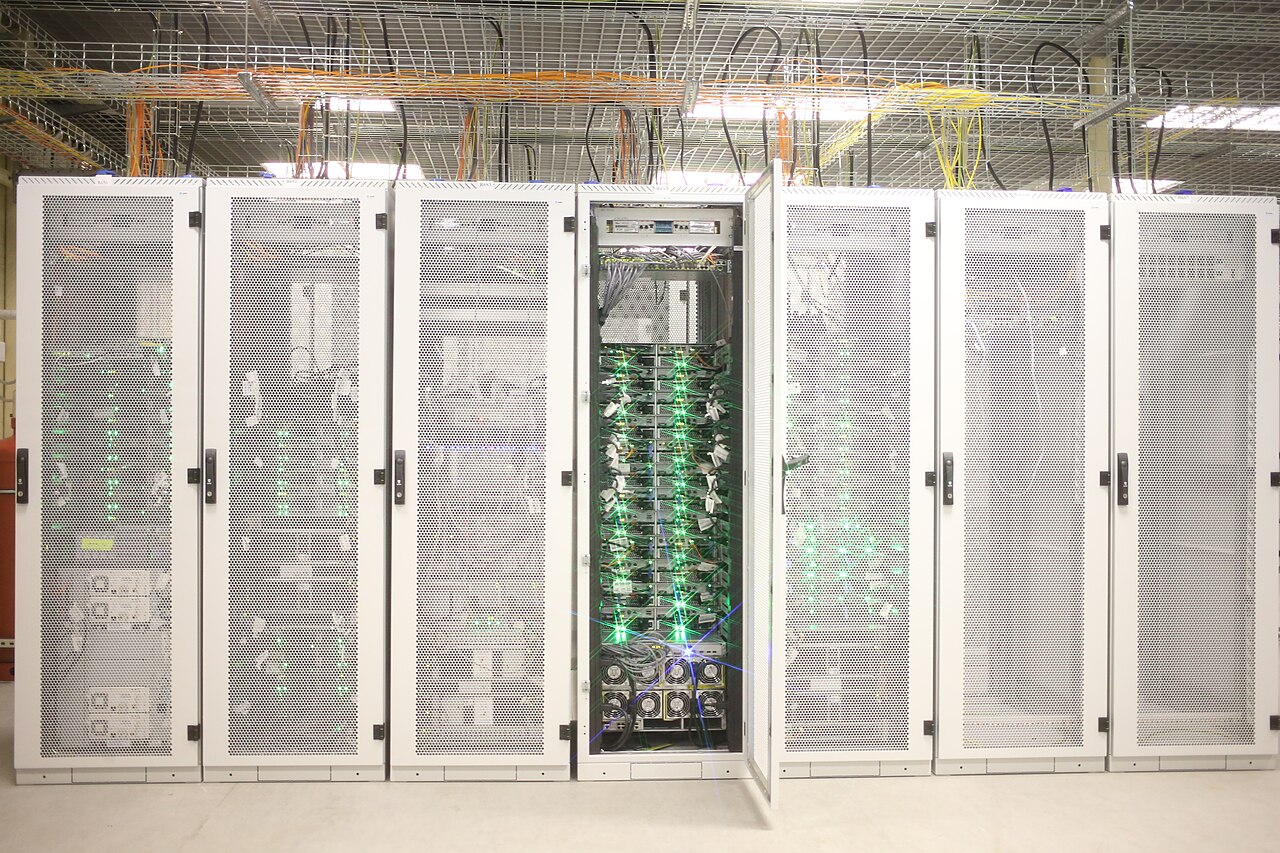
Featured image: detail of an electronic circuit, used as a technology illustration. Photo: Paolo Neo/Wikimedia Commons, public domain.