
The death toll from an attack on a church during a funeral in Jordan rose to nine on Saturday (24), according to the Associated Press. Nearly 40 people were injured in the shooting that occurred the previous day in the village of Hamoud, Karak province, about 90 kilometers south of the capital, Amman.
Gunmen opened fire on mourners gathered at St. George Greek Orthodox Church. The initial death toll released by Jordanian authorities stood at seven dead and 40 injured, but was updated the following day. As of the publication of this report, no group had claimed responsibility and the motive for the attack remained unknown.
What is known about the attack
The shooting occurred on Friday (23), while relatives and local residents were attending a funeral. Security camera footage broadcast by Jordanian state television shows armed individuals approaching the church and opening fire. Reuters verified the location of the footage based on the access road and the wall surrounding the temple, but the video alone does not make it possible to determine how many attackers participated in the entire action.
Witnesses reported several minutes of gunfire. The Associated Press reported that survivors saw masked, armed men attacking people standing outside the church before shooting at the facade. Authorities have not announced any arrests nor publicly identified suspects.
This point is relevant because initial versions circulated with differing numbers of attackers and victims. The most recent figure confirmed by an independent source is nine dead and nearly 40 injured; the Jordanian investigation remains ongoing.
Government classifies incident as terrorist attack
The government of Jordan described the incident as a terrorist act committed by extremists. King Abdullah II ordered a firm response from authorities and declared that any attempt to compromise the country’s unity would be confronted. Prime Minister Jafar Hassan also attributed the violence to an extremist ideology and promised legal accountability.
Jordan declared three days of national mourning. Countries in the region and United Nations Secretary-General António Guterres condemned the attack. Still, there is no public confirmation linking the shooters to a known organization, and claims without proof should be treated as speculation.
Karak and Jordan’s Christian minority
Karak is home to a historic Christian community and is frequently associated with coexistence between Christians and Muslims. The attack occurred in a context where incidents of this scale are rare in Jordan, a country that maintains relative stability despite security crises in the surrounding region.
The region, however, had previously been targeted by violence. In 2016, a series of attacks in Karak killed ten people, including seven police officers, before a lengthy security forces operation. The current incident once again exposes the challenge of protecting places of worship and community gatherings without turning the early hours of an investigation into hasty conclusions.
Investigation and update on figures
Jordanian authorities are continuing their search for those responsible and have not yet offered a public explanation for the choice of target. As the casualty count changed between Friday and Saturday, further updates regarding victims and suspects may occur.
Reporting for this story cross-referenced reports from Reuters and the Associated Press with coverage from NPR and the BBC. The core information was updated to reflect the most recent available toll.
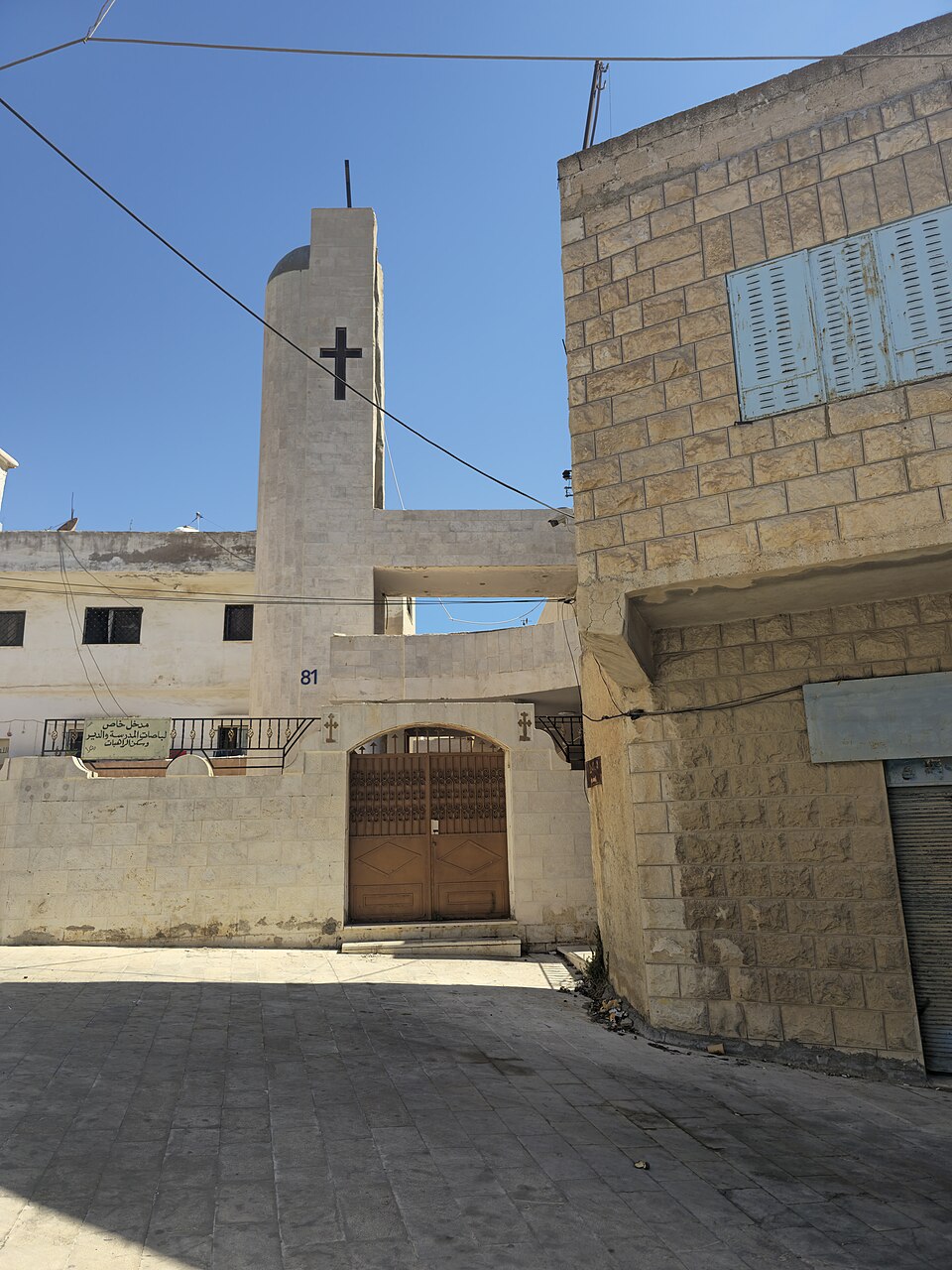
Featured image: Catholic church in the city of Karak, used solely for geographical context. The photograph does not show the temple where the attack took place. Photo: Mohammad hajeer/Wikimedia Commons, CC BY-SA 4.0 license.