
India will host the 18th BRICS Leaders’ Summit in New Delhi this weekend, on September 12 and 13. The meeting takes place at a time of strong geopolitical pressure: the war against Iran has deepened differences within the expanded bloc and turned the drafting of a joint declaration into one of the meeting’s main diplomatic tests.
India’s Ministry of External Affairs confirmed that the summit will be held at Bharat Mandapam. As BRICS chair in 2026, New Delhi will try to reconcile the positions of countries that maintain distinct strategic and economic interests in the Middle East.
Iran and the Emirates on Opposite Sides
The most delicate point involves Iran and the United Arab Emirates, both members of the grouping. The military escalation has affected commercial and financial relations between the two countries and increased the difficulty of achieving consensus language.
According to Reuters, BRICS foreign ministers had already ended a meeting in May without a joint statement due to differences. Now, leaders will try to overcome the impasse and demonstrate that the bloc’s expansion has not rendered its coordination capacity unfeasible.
The crisis has also hit strategic energy and transport routes. The reduction of flow through the Strait of Hormuz has put pressure on international oil prices, connecting security discussions to the group’s economic priorities.
Xi, Putin and Modi at the Center of Negotiations
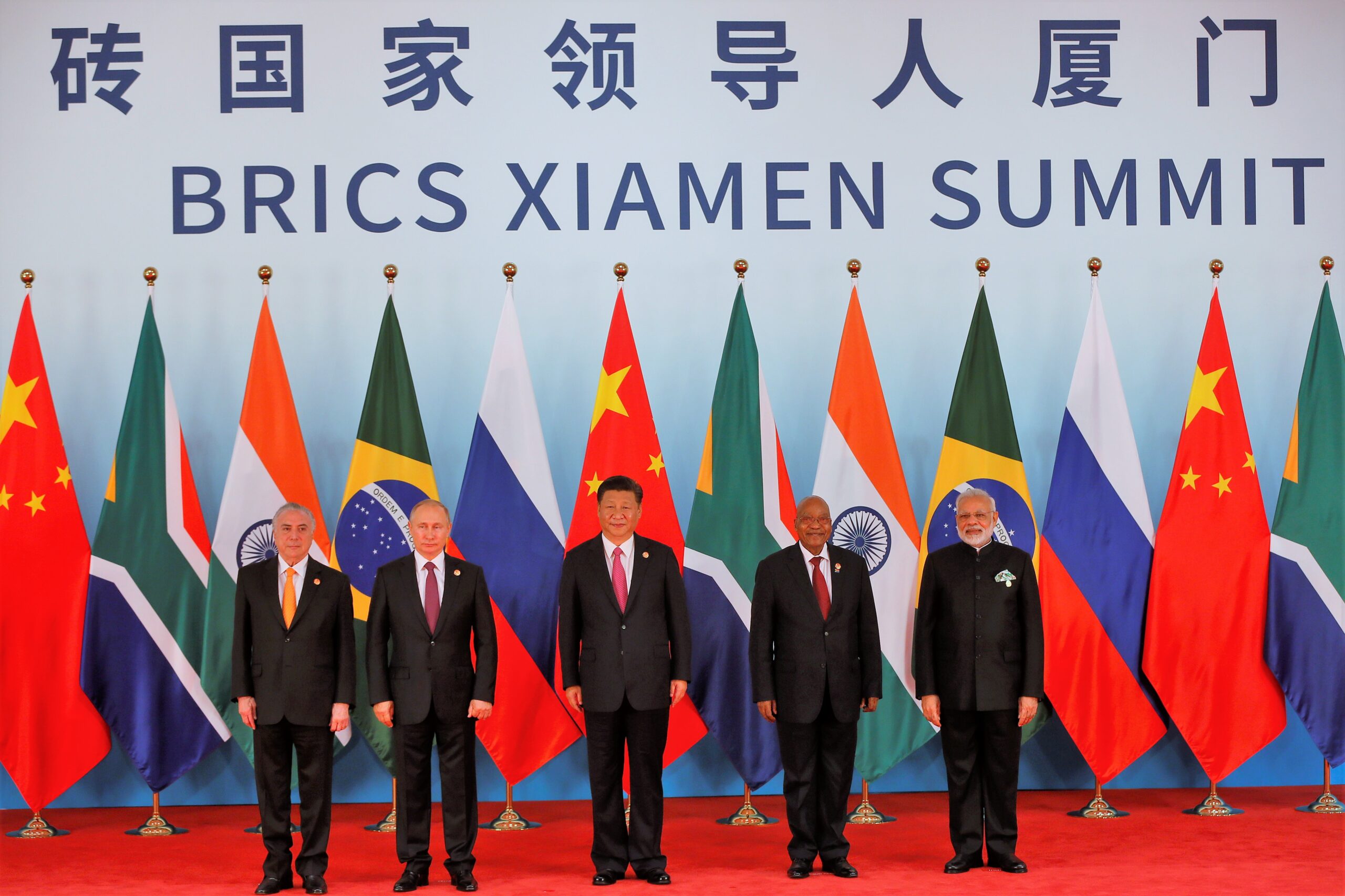
The expected attendance of Chinese President Xi Jinping, in his first visit to India in seven years, adds extra weight to the meeting. Xi is expected to talk with Prime Minister Narendra Modi amid a gradual attempt to stabilize relations between China and India after years of tension along the Himalayan border.
Russian President Vladimir Putin will also hold bilateral meetings with Modi. Trade, energy, and strategic cooperation are expected to top the agenda, as India seeks to preserve its historical ties with Moscow and manage Western pressure related to purchases of Russian oil.
Representatives from Brazil, South Africa, Egypt, Ethiopia, Indonesia, Iran, and the United Arab Emirates are also expected, alongside United Nations Secretary-General António Guterres. The expansion increased the representation of the Global South, but brought regional disputes inside the group, making consensus decisions more difficult.
Political Unity Will Be the Main Outcome
Even if the final declaration does not immediately alter the military landscape, a consensus would carry political value. It would allow BRICS to sustain its ambition of influencing global governance reforms, expanding its own financial mechanisms, and defending common positions against sanctions and unilateral trade policies.
On the other hand, another failure to produce a joint statement would reinforce doubts about the operational capacity of the expanded bloc. The outcome of the summit will show whether the diversity that raised the international weight of BRICS can also be translated into diplomatic coordination.
Sources: Reuters, Ministry of External Affairs of India, and Press Information Bureau of India.