
Voting in the runoff for the Presidency of the Republic ended at 5:00 p.m. this Sunday, October 25, Brasília time, and the Superior Electoral Court (TSE) began tabulating the votes in the contest between Luiz Inácio Lula da Silva (PT) and Flávio Bolsonaro (PL). At the time of writing, no winner had been confirmed. Official results are updated as ballot box reports arrive at the court and are processed.
More than 158.7 million people were eligible to vote. In addition to the nationwide presidential choice, voters in some states and municipalities participated in local runoff races or supplementary elections. National attention, however, is focused on the race for the Planalto Palace, which reached its decisive stage after a narrow margin in the first round.
How vote tabulation works
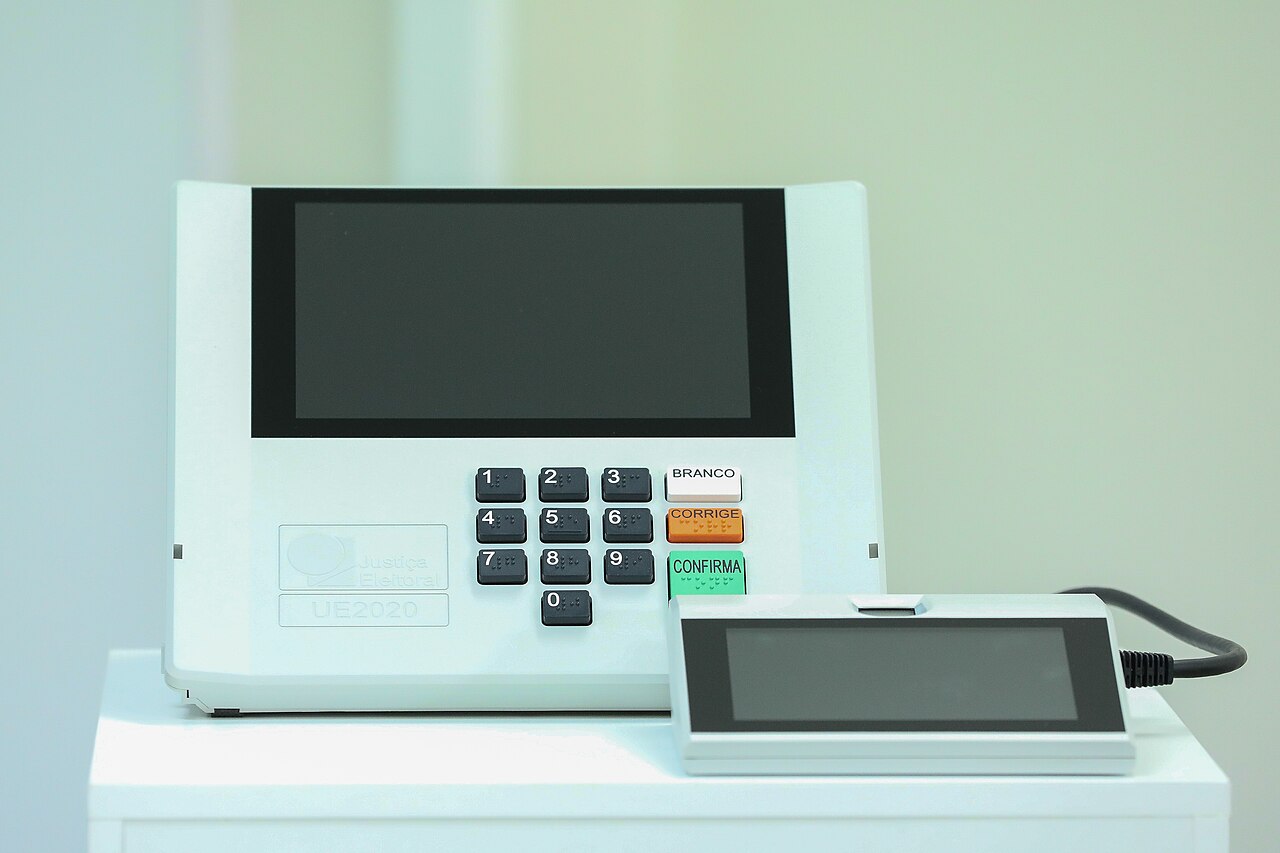
When voting ends at a polling station, the voting machine generates the Ballot Box Report (BU), a document containing the results for that location. According to the TSE, data from the reports is transmitted to the court and published as it is received and processed.
The Results portal allows tracking the tabulation by country, state, municipality, electoral zone, office, and candidate. It also reports the number of tabulated polling stations and voter turnout. Voters can consult the BU of each polling station, the digital vote record, and the voting machine log, which gathers information about equipment operation and opening and closing times.
This sequence explains why the lead can change during the early hours: reports do not all arrive at the same time, and regions with different voting profiles enter the national total at different paces. An early lead, therefore, does not equal a declaration of victory.
Race reached runoff with a 2.2 million gap
In the first round, held on October 4, Flávio Bolsonaro received 56,104,268 votes, or 47.03% of valid votes, according to the TSE. Lula obtained 53,876,617 votes, equivalent to 45.16%. The difference was just over 2.2 million votes.
Since no candidate surpassed half of the valid votes, the top two vote-getters advanced to the runoff. Polls released on the eve showed a tie within the margin of error, which increased the importance of participation by voters who abstained or chose other candidates in the first round.
The Associated Press and Reuters highlighted that the election pits competing visions for the economy, public safety, social policies, the environment, and foreign relations against each other. The result will also define the executive’s political composition facing a Congress that leaned further to the right in the legislative elections.
Campaigns requested extension of voting hours
In the final minutes before the scheduled closing of the polls, both campaigns requested additional voting time in specific areas. Lula’s campaign cited public transit issues in cities across several states. Flávio Bolsonaro’s campaign mentioned difficulties caused by heavy rain in the South.
Reuters and the AP reported the requests while electoral authorities evaluated local situations. In Salvador, the judiciary ordered the arrest of a transit official amid allegations of reduced bus fleets. These episodes remain subject to official decisions and investigations; therefore, they do not allow a standalone conclusion on what impact they had on turnout or the result.
Official result must prevail over projections
With the race so close, unverified figures and projections posted on social media may circulate before there is sufficient basis for a conclusion. The benchmark for the outcome is the TSE’s official tabulation, which aggregates the reports transmitted by polling stations.
The winner of the runoff is the candidate who receives the most valid votes. Blank and spoiled ballots are not included in this calculation. Inauguration for the four-year term is scheduled for January 2027.
This report was completed after tabulation began and will be preserved as a record of that moment: no winner had yet been officially confirmed. The final result should be checked on the TSE portal.
Image: Brazilian UE2020 electronic voting machine, photographed in 2021. Credit: Antonio Augusto/Secom/TSE, public domain, via Wikimedia Commons.