
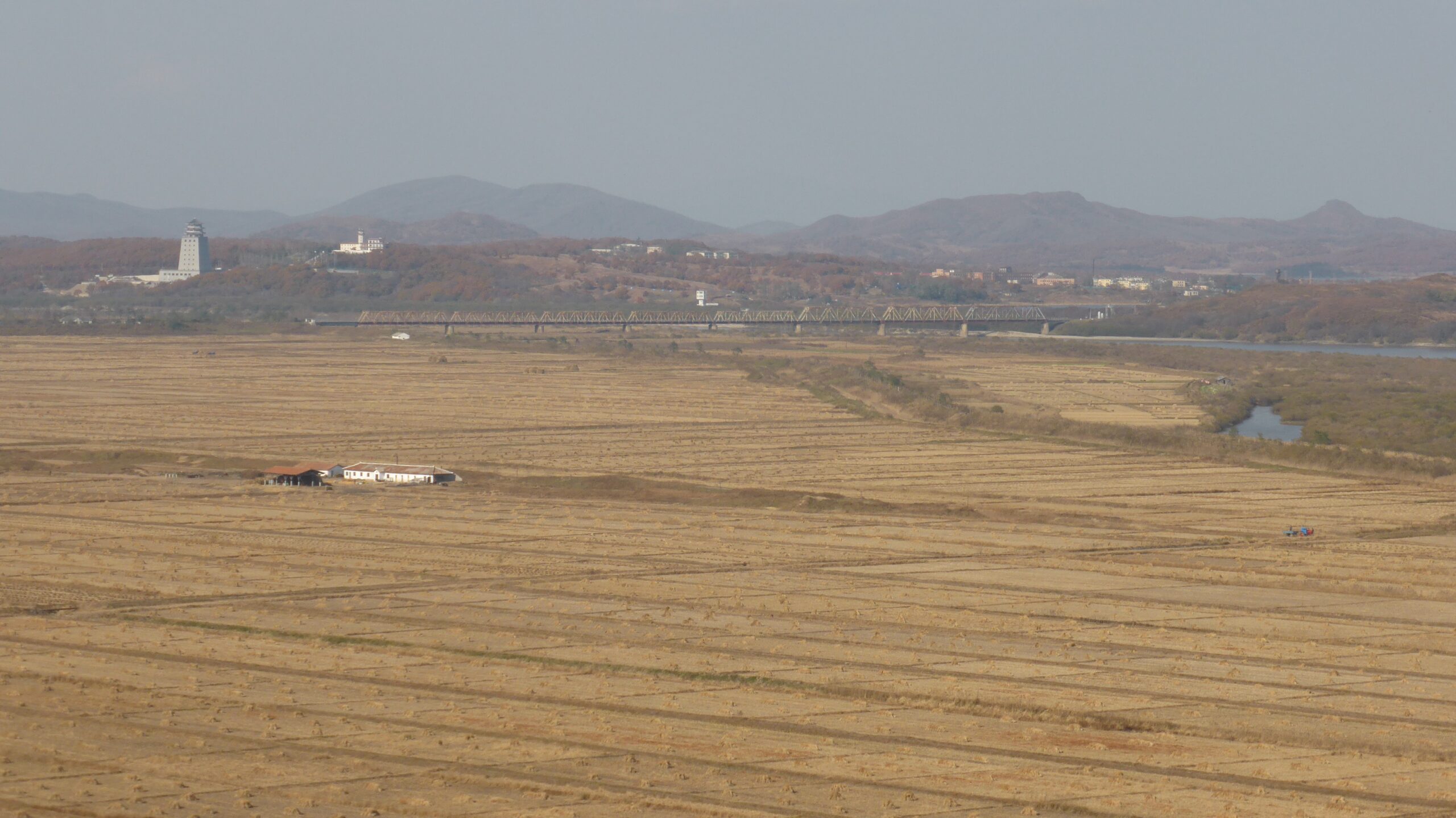
Russia and North Korea inaugurated the first direct road bridge between the two countries on Monday, September 7. The structure crosses the Tumen River and creates a new overland freight route, complementing the rail and air links already in operation.
Approximately one kilometer long and carrying two lanes, the bridge connects to a new border checkpoint and Russia’s road network. According to information released by the two governments and reported by Reuters and the Associated Press, the planned capacity is up to 300 vehicles a day.
Freight first, passengers later
Operations are beginning with a focus on cargo. Authorities say passenger traffic is expected to start by the end of the year, after immigration and customs-control procedures are completed.
Russian Prime Minister Mikhail Mishustin and North Korean Premier Pak Thae Song took part in the ceremony by video link. Mishustin described the opening as a milestone for economic, scientific, technological, cultural and tourism cooperation.
The project was agreed during Russian President Vladimir Putin’s visit to Pyongyang in 2024. Construction began in 2025 beside the older Friendship Bridge, a rail connection opened in 1959.
Integration with geopolitical weight
Although official statements emphasize trade and tourism, the new route also carries strategic significance. Relations between Moscow and Pyongyang have deepened during the war in Ukraine. North Korea has sent troops and supplied ammunition in support of Russia, while the two governments have expanded political and military agreements.
The bridge may reduce transport costs and journey times at a border that has until now depended mainly on rail. It also gives North Korea another channel for external trade, which has historically been concentrated on China.
The economic reach of the project will depend on actual freight volumes, international sanctions rules and the capacity of customs terminals. Its inauguration nevertheless changes the border’s infrastructure and establishes a permanent corridor capable of supporting closer bilateral ties.
Both a symbol and a logistics tool
The bridge was named after Yakov Novichenko, a Soviet soldier celebrated in North Korea. For both governments, the tribute reinforces a historical narrative of friendship. For outside observers, the most important element is practical: the crossing enables regular truck traffic and may later accommodate cars and buses.
The opening comes as international scrutiny of cooperation between Russia and North Korea continues to grow. Cargo and passenger movements across the bridge are therefore likely to be closely watched by countries in the region and by governments involved in enforcing sanctions.
Sources: Reuters and Associated Press.