
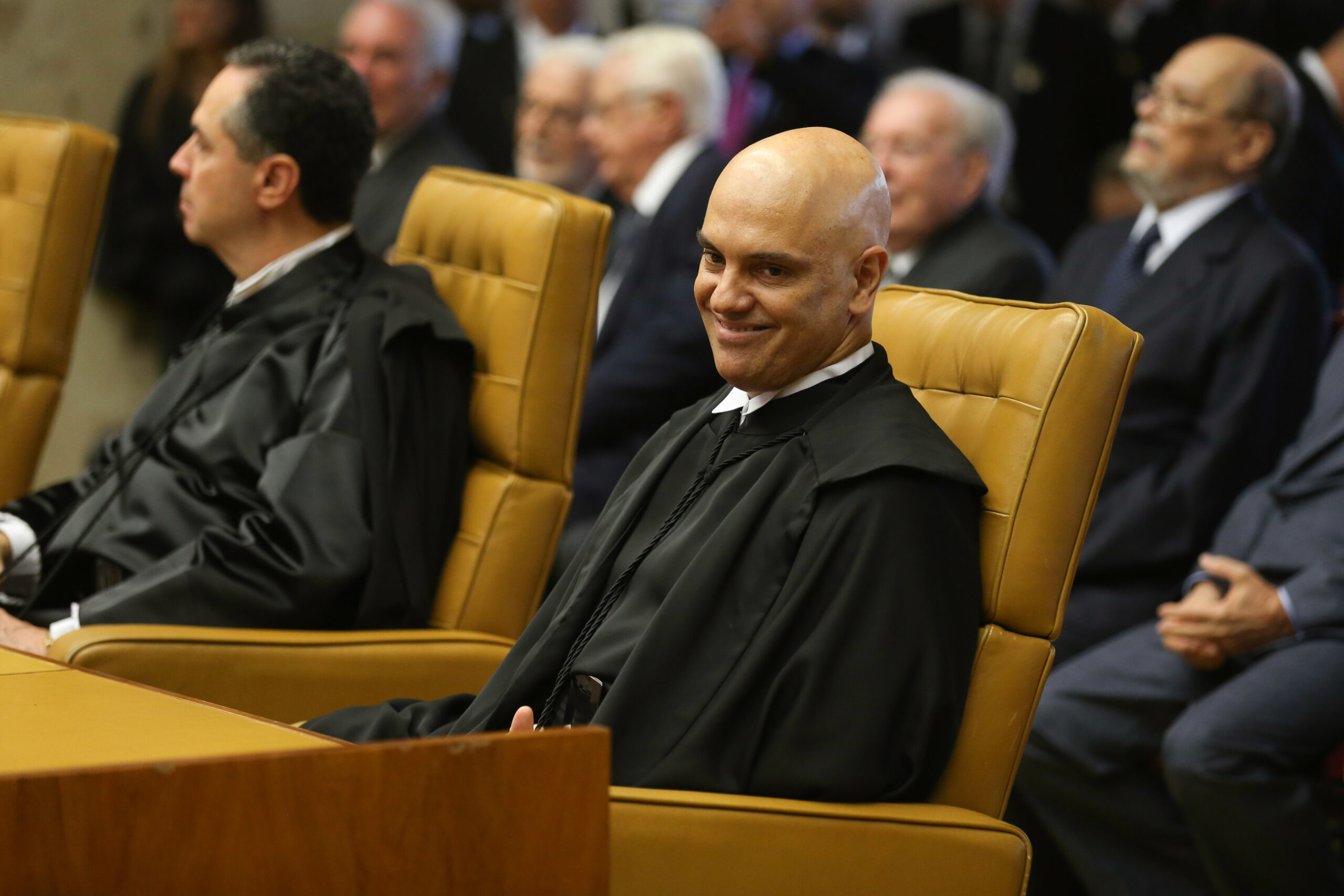
Internal tensions at Brazil’s Supreme Federal Court (STF) intensified on Tuesday, September 8, after rulings and requests for investigations placed Justices Alexandre de Moraes and André Mendonça on opposing sides of a crisis that has also reached the leadership of the Federal Police.
The episode gained new weight after Mendonça ordered the preventive suspension of Federal Police Director-General Andrei Rodrigues and Intelligence Director Leandro Almada. The decision was submitted to the STF’s Second Panel and received enough votes for a majority, although a request for further review interrupted the final conclusion of the judgment.
How Alexandre de Moraes became central to the dispute
The conflict involves reports produced by the Federal Police and submitted in investigations conducted at the Supreme Court. Mendonça said the documents may have improperly examined his activities and personal connections, including references to religion and institutional contacts.
Alexandre de Moraes, in turn, requested an investigation into Mendonça’s conduct on grounds of possible abuse of authority. The allegations are disputed and do not constitute a judicial finding of responsibility by any justice or Federal Police official.
STF President Edson Fachin has moved to organize the handling of the measures and request explanations. The crisis comes amid sensitive investigations and increases pressure on the court to establish an institutional response capable of preventing disagreements between chambers from undermining confidence in the judiciary.
Suspension of Federal Police leaders
Mendonça justified the order against Andrei Rodrigues and Leandro Almada as a preventive measure amid suspicions concerning the production and circulation of intelligence reports. Senior Federal Police officials expressed support for the director-general and disputed the accusations against the institution.
The federal government is assessing the available legal measures. Because the Federal Police director-general is appointed by the president, the suspension has also opened a debate over the boundaries between judicial authority and the powers of the executive branch.
Political repercussions
Opposition groups intensified their criticism of Moraes and renewed calls for the Senate to examine impeachment requests against the justice. Government allies, meanwhile, described the removal of the Federal Police leadership as a decision with major institutional consequences and defended the agency’s autonomy.
The case is unfolding during an election period and is likely to be used by different political groups. Distinguishing confirmed facts from allegations and ongoing investigations is therefore essential: so far, no final ruling has established criminal or administrative responsibility for Moraes, Mendonça or the police officials involved.
Next steps
The continuation of proceedings before the Second Panel, possible government appeals and measures adopted by the STF presidency will shape the immediate course of the crisis. The origin, purpose and legality of the disputed reports will also have to be clarified.
The dispute exposes a broader question: how the Supreme Court should investigate allegations involving its own members without compromising judicial independence, due process or institutional credibility.
Sources: Reuters, Associated Press and UOL. Original article produced by the Memória do Gelo newsroom on September 8, 2026.