

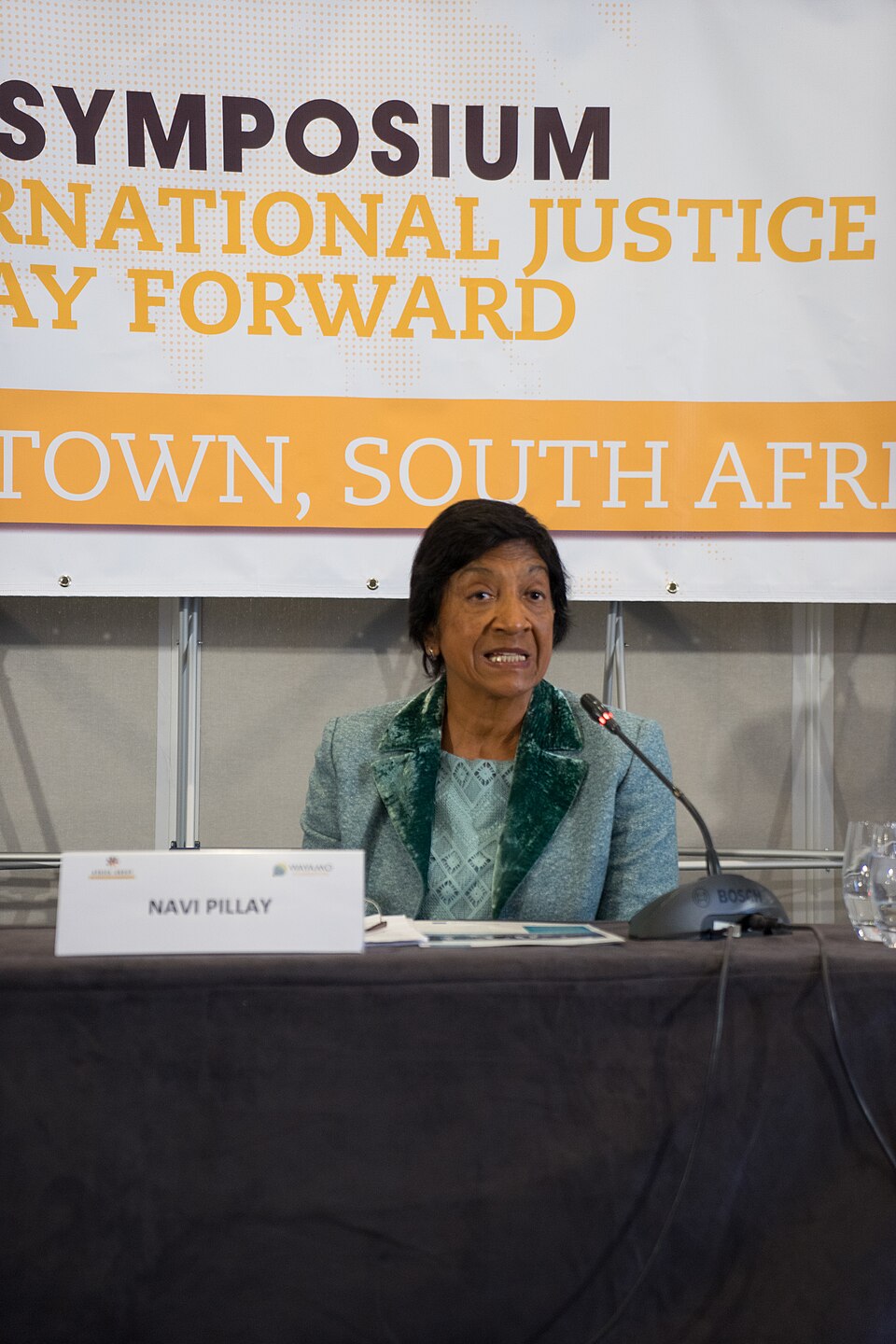
South African jurist Navanethem “Navi” Pillay was awarded the 2026 Nobel Peace Prize on Friday, October 9. The Norwegian Nobel Committee said it selected her for her work to advance peace and international law, highlighting a career devoted to accountability for war crimes, crimes against humanity and genocide.
At 85, Pillay is one of the most experienced figures in international justice. She served as United Nations High Commissioner for Human Rights, sat on international criminal tribunals and currently serves as an ad hoc judge at the International Court of Justice. The announcement was made in Oslo and placed the strengthening of multilateral legal institutions at the center of this year’s award.
A career shaped under apartheid
Born in Durban, South Africa, into a family of Indian Tamil origin, Pillay began her professional career during apartheid. In 1967, she became the first woman to open a law practice in what was then Natal province. Her work included defending anti-apartheid activists and pursuing legal protections for political prisoners held on Robben Island.
After apartheid ended, Nelson Mandela appointed her to South Africa’s High Court, making her the first non-white woman to hold that office. Her national experience opened the way to roles in international institutions responsible for investigating and judging serious human rights violations.
Work in international courts
Pillay served on the International Criminal Tribunal for Rwanda and played an important role in decisions recognizing that rape and sexual violence can constitute crimes against humanity and acts of genocide. She later served as a judge at the International Criminal Court from 2003 to 2008.
From 2008 to 2014, she was the UN High Commissioner for Human Rights. In later years, she chaired the United Nations Independent International Commission of Inquiry on the Occupied Palestinian Territory, including East Jerusalem, and Israel. The commission concluded that Israel committed genocide in Gaza; the Israeli government rejects that allegation and publicly challenged both the report and Pillay’s selection for the Nobel Prize.
She currently serves as an ad hoc judge at the International Court of Justice in the case brought by The Gambia against Myanmar over allegations of genocide against the Rohingya minority.
Why the committee selected Pillay
In its official citation, the Norwegian Nobel Committee said Pillay helped broaden the reach and effectiveness of international law. It also emphasized her independence, integrity and contribution to strengthening courts as instruments for conflict resolution and victim protection.
The announcement comes at a time of intense pressure on multilateral courts and the legal architecture created after World War II. According to the committee, honoring the jurist reaffirms that lasting peace depends on justice, shared rules and accountability for individuals and states.
The choice was also welcomed by UN High Commissioner for Human Rights Volker Türk, who described the prize as collective recognition for people and institutions working for justice and accountability.
Award ceremony scheduled for December
The Nobel Peace Prize will be presented in Oslo on December 10, the anniversary of Alfred Nobel’s death. This year’s award is worth 12 million Swedish kronor, or about US$1.2 million.
Pillay learned of the decision while attending an international law forum in Nuremberg, Germany. After the announcement, she dedicated the recognition to survivors of international crimes and to professionals working to prevent impunity.
Sources
- Norwegian Nobel Committee — official 2026 Nobel Peace Prize announcement
- Reuters — profile and international reaction
- Associated Press — Navi Pillay’s career and award context
Image: Navi Pillay in 2018. Photo: Wayamo Foundation, via Wikimedia Commons, CC BY-SA 2.0.