
The first global assessment of shallow-water coral reef ecosystems has concluded that 96% of them are Critically Endangered and at risk of collapse by 2075. The International Union for Conservation of Nature (IUCN) released the findings on Thursday, October 22. The assessment covers 127 tropical and subtropical ecoregions in more than 80 countries and territories.
Prepared for the IUCN Red List of Ecosystems, the study combines decades of coral monitoring, evidence of ecosystem degradation and sea-surface temperature records. In total, it assessed 188,362 square kilometres of coral reefs.
Risk of collapse does not mean immediate disappearance
The classification measures the risk that an ecosystem will lose the defining features that support its biodiversity. In a collapsed reef, the hard corals that build its living structure nearly disappear and are replaced by algae, rubble and sponges. The environment can no longer provide the same protection and variety of habitats for fish, turtles, molluscs and other organisms.
The result therefore does not mean that 96% of reefs have already disappeared. The IUCN says most remain alive and may still recover. Four ecoregions were classified as Data Deficient, while the western Galápagos Islands are already considered Collapsed following the severe 1982–1983 El Niño event.
Ocean warming increases the risk
Heat stress driven by global warming is the most consistent threat. Marine heatwaves make bleaching events more frequent and can cause large-scale mortality. The assessment includes projections of future warming; when only observed changes over the past 50 years are considered, without those projections, 24% of reef ecosystems would fall into the most severe category instead of 96%.
Major systems — including Australia’s Great Barrier Reef, the Coral Triangle in the western Pacific and Southeast Asia, the Mesoamerican Barrier Reef System and Red Sea reefs — are among those classified as Critically Endangered.
Local pressures also matter
In addition to climate change, overfishing, pollution, coastal development, overtourism, aquaculture and more frequent storms reduce reefs’ ability to recover. Overexploitation of important groups such as parrotfish and groupers affects 63% of the assessed ecosystems, according to the IUCN. These animals help control algae and maintain the balance of the marine food web.
The Associated Press noted that reefs support about a quarter of marine species and provide direct economic and social benefits to coastal communities through fisheries, tourism and protection against erosion and storms.
Recovery is still possible
The report says rapid emissions cuts are essential to limit ocean warming, while local measures can buy time: expanding marine protected areas, reducing pollution, rebuilding populations of key fish and restoring coastal habitats. Protecting resilient pockets may support recovery after extreme events.
More than 250 experts contributed to the assessment, coordinated by the IUCN, its Commission on Ecosystem Management, the University of Melbourne and CORDIO East Africa, in partnership with regional monitoring networks.
Sources
- IUCN — global Red List of Ecosystems assessment
- Associated Press — independent coverage of the assessment
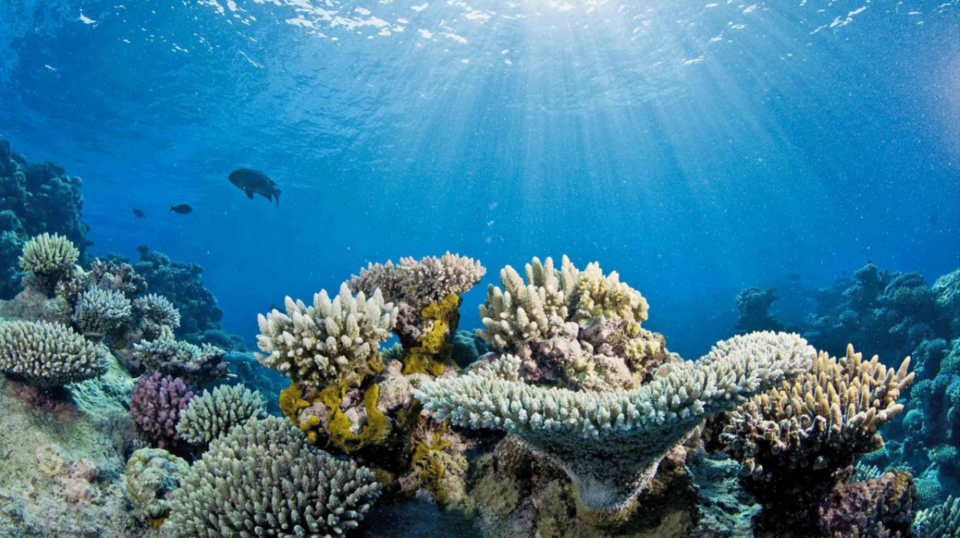
Archive image: reef with healthy corals and signs of bleaching. Credit: NOAA/Wikimedia Commons. Public domain in the United States.