
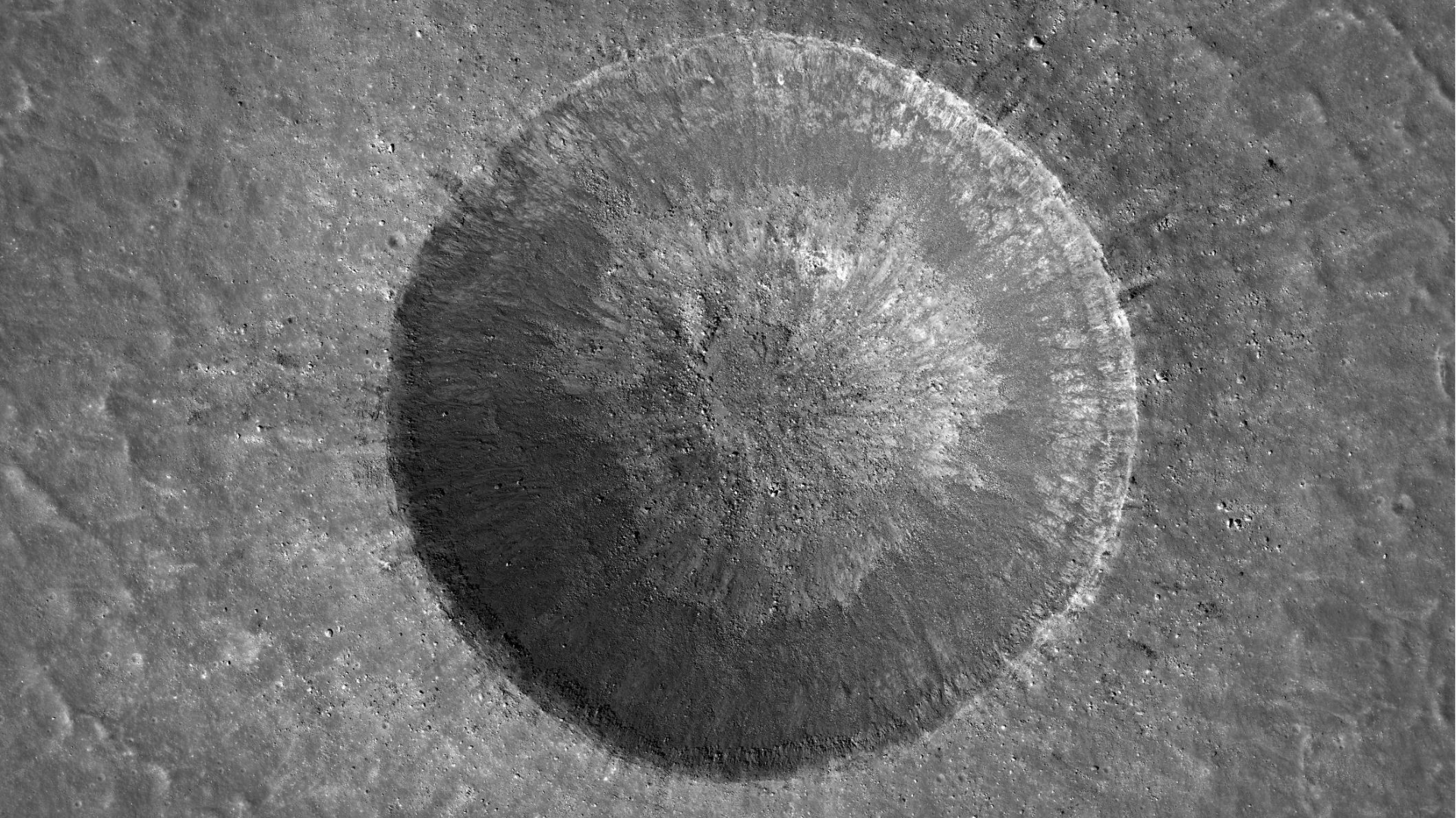
NASA and IBM launched an open-source artificial intelligence model on Thursday (10) developed to analyze decades of lunar observations. Named the NASA-IBM Lunar Foundation Model, the tool can assist researchers in locating potential ice deposits, mapping craters, and studying volcanic formations on the lunar surface.
The system was trained on more than 30 spatially aligned data layers collected by nine instruments across four missions. Among them are NASA’s Lunar Reconnaissance Orbiter (LRO) and the GRAIL mission, alongside complementary information from the Japanese SELENE/Kaguya mission.
Data from different missions in a single model
The main breakthrough lies in combining observations obtained by different sensors, scales, and resolutions. This type of information usually requires manual analysis of maps and images or machine learning models specialized in just a single task.
According to IBM and NASA, the new model offers a reusable foundation that can be adapted by scientists for various research efforts. The project is part of the Prithvi family, which already includes open models focused on geospatial, meteorological, and solar physics applications.
Search for ice and safety of future missions
Permanently shadowed regions at the lunar poles spark interest because they may preserve ice below the surface. The potential presence of water and oxygen in these areas is considered relevant for long-term human stays and, in the future, for producing fuel for more distant missions.
In tests released by the project leads, the model reduced error in identifying areas with higher ice potential by up to 22% compared to a baseline method. In broader-scale crater detection, it outperformed the comparison model by nearly 19% using half the training data. These results are research benchmarks and do not imply automatic confirmation of the existence of ice at each indicated location.
Open tool for the scientific community
In addition to supporting landing site selection and terrain hazard identification, the tool could help analyze the Moon’s geological history. The model and dataset were made available so researchers can test and adapt them to new scientific questions.
Reuters confirmed the launch and key technical details released by the organizations. The initiative links to the plans of the Artemis program, which aims to expand lunar exploration and test technologies for a sustainable human presence, although mission decisions remain subject to additional scientific and operational evaluations.
Sources: Reuters; IBM and NASA.