
Google announced on Wednesday (16) the largest carbon removal purchase ever made by the company. The partnership with climate company Terradot plans to operate in more than 200,000 hectares of rice paddies in Rio Grande do Sul, combining two strategies: rapidly reducing methane emissions from cultivation and removing carbon dioxide from the atmosphere using crushed volcanic rock.
The deal draws attention not only for its size, but for its design. Instead of treating methane and CO₂ as separate problems, the project attempts to coordinate a faster-acting action with a long-lasting one, using the same agricultural areas. The financial value of the transaction was not disclosed.
How the project aims to reduce methane
Irrigated rice paddies remain flooded during part of the production cycle. In low-oxygen conditions, the decomposition of organic matter in the soil favors the formation of methane, a greenhouse gas that warms the atmosphere with high intensity in the short term.
The first front of the project will be the adoption of so-called alternate wetting and drying. The technique periodically drains the fields instead of keeping them continuously flooded. According to Google and Terradot, the shift can reduce methane emissions as well as water consumption, without taking the areas out of agricultural production.
The contracted target for this stage is to generate, by 2030, an impact equivalent to the elimination of 1 million metric tons of CO₂ equivalent, calculated based on methane’s warming potential over a 20-year horizon.
Crushed rock to remove CO₂ from the air
The second front uses enhanced rock weathering. Silicate-rich volcanic rock is crushed and spread over the soil. As it dissolves with rainwater, its minerals react with CO₂ and help transform it into stable chemical forms, such as bicarbonates.
This process occurs naturally, but crushing increases the surface area of the rock and accelerates the reactions. The expectation is to durably remove 1 million metric tons of CO₂ by 2040.
The two figures in the agreement represent different effects: the 2030 target corresponds to reducing the climate impact of methane, expressed in CO₂ equivalent; the 2040 target corresponds to the physical removal of carbon dioxide from the atmosphere. Summing them up as if they were the same removal method would be inaccurate.
Why Rio Grande do Sul
The state accounts for a large portion of Brazilian irrigated rice production and combines extensive fields, water availability, and proximity to basaltic rock sources. These conditions reduce logistical distances and could favor the expansion of enhanced weathering.
According to Google, the model could be expanded to the approximately 1.5 million hectares dedicated to rice in Brazil and, in the future, adapted to other major producers. Reuters reports that Terradot began pilot activities in 2026 and plans to move to commercial scale starting in 2028.
AI, data centers, and pressure for climate results
The announcement comes as tech companies face growing scrutiny over energy consumption and emissions associated with the expansion of data centers and artificial intelligence systems. Folha reported that Google’s emissions reached 14.4 million metric tons of CO₂ equivalent in 2025, an 18% increase in one year and an 80% rise compared to 2019.
In this scenario, funding carbon removal can help develop climate technologies that are still expensive. However, this does not replace direct emission reductions in operations, electricity, and the supply chain. The real outcome of the Brazilian project will depend on implementation on farms, grower adoption, and independent measurement and verification.
What the project could mean for Brazil
If it delivers on the announced targets, the initiative could place Brazilian agriculture at the center of a model combining water management, methane reduction, and mineral carbon removal. It could also generate data on costs, productivity, soil health, and carbon permanence on a scale that remains largely untested.
The main point of attention will be turning long-term goals into measurable results. The size of the contract creates expectations, but credibility will stem from transparent methods, credit verification, and regular disclosure of performance.
Sources
- Google — deal with Terradot and climate goals in Brazil
- Reuters — Google’s biggest carbon removal deal
- Folha — project starts in Rio Grande do Sul
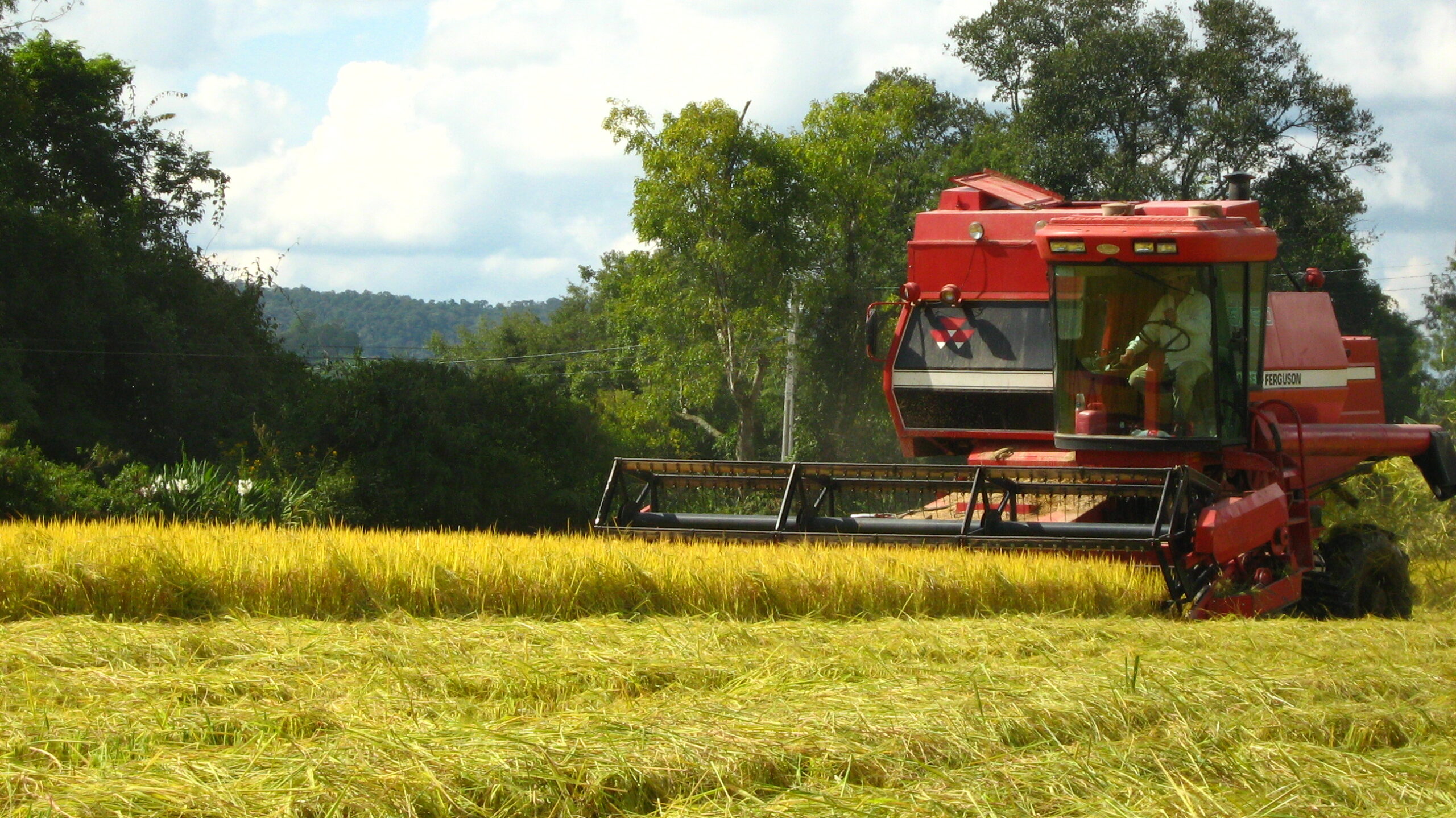
Featured image: harvest in a rice crop near Rio do Sul, in Santa Catarina. Illustrative image. Photo: Herr stahlhoefer/Wikimedia Commons, public domain.