
The future of emperor penguins is increasingly linked to the pace of global warming and the stability of Antarctic sea ice. Recent studies indicate that many colonies could experience declines exceeding 90% by the end of the century under high-emissions scenarios. This condition is described by researchers as quasi-extinction—it does not necessarily mean the disappearance of all individuals of the species.
The distinction is important. Scientific studies do not claim that all emperor penguins will inevitably disappear by 2100. They present projections contingent on future emissions, the response of sea ice, and the ability of colonies to survive or relocate.
What Satellite Observations Show
A study published in 2025 in the journal Communications Earth & Environment analyzed 16 colonies between 2009 and 2023, in a region home to approximately one-third of the species’ global population. The best estimate was a 22% decline during the period, equivalent to about 1.6% per year. The authors emphasize that there is uncertainty in the methodology and that results from this region should not be automatically applied to the whole of Antarctica.
The observed reduction was greater than that indicated by previous demographic models for high-emissions scenarios. At the same time, researchers state that it is not possible to attribute the entire decline exclusively to recent ice loss. Prey availability, ocean changes, rain, storms, and movements between colonies can also influence the numbers.
Why Sea Ice Is Essential
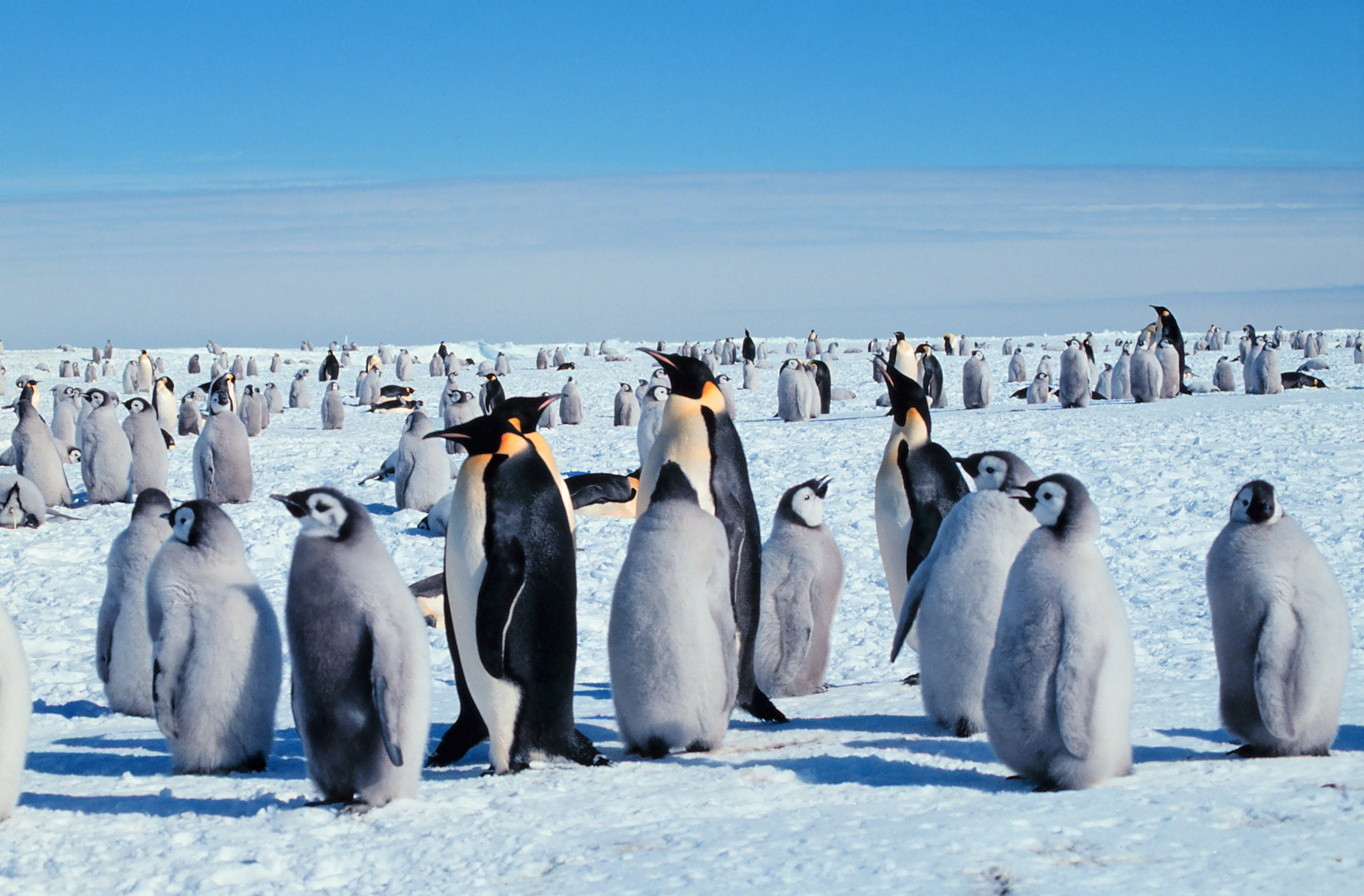
The emperor penguin relies primarily on land-fast ice to complete its breeding cycle. Adults arrive at breeding sites during the Antarctic autumn, and chicks must remain on a stable platform until they develop waterproof feathers. When ice breaks up prematurely, young birds can fall into the water before they are ready to swim and survive.
The British Antarctic Survey documented an extreme breeding failure in 2022 in the Bellingshausen Sea region. Four of the five monitored colonies lost all or nearly all chicks after the ice vanished ahead of the expected timeframe. In isolation, the episode does not prove that the same will happen every year, but it shows how an unfavorable season can affect multiple colonies simultaneously.
What “Quasi-Extinction” Means
An analysis published in 2026 in Nature Communications projected changes in the ecological value of areas of the Southern Ocean through the 2090s. In the analyzed scenarios, most emperor penguin colonies showed sharp declines, and many reached the quasi-extinct category, defined in the study as a population loss exceeding 90%. Some areas of the Ross and Weddell seas remained relatively more favorable.
These projections are not a tally of the future. They are the results of models combining climate scenarios, sea ice concentration, and population dynamics. Their objective is to indicate risks and help identify regions that may remain important for conservation.
Decline Already Observed and a Future Still Contingent
Available measurements show that the problem is not limited to a distant hypothesis. The 22% regional decline recorded between 2009 and 2023 and the breeding failures associated with early ice breakup are observable signs. However, the scale of the decline by 2100 still depends on future warming trajectories.
The Australian Antarctic Program currently classifies the emperor penguin as threatened and highlights that its populations are expected to decline over coming generations due to the projected effects of climate change. The institution also notes that most colonies are located on land-fast ice and that satellite tracking, aerial surveys, and field counts are necessary to understand regional differences.
What Can Reduce the Risk
Reducing greenhouse gas emissions is the single most far-reaching measure to limit long-term changes in sea ice. Protecting ecologically important areas, controlling pressures on the food web, and continuously monitoring colonies can also improve scientific response capacity and guide conservation policies.
Therefore, the phrasing most faithful to the evidence is that many colonies could approach local extinction by the end of the century if high-warming scenarios persist. The complete disappearance of the species is neither an inevitable outcome nor an observed conclusion.
Sources Consulted
- Communications Earth & Environment — regional decline of emperor penguin populations
- Nature Communications — ecological projections for Antarctica through the 2090s
- British Antarctic Survey — populations declining faster than projected
- British Antarctic Survey — breeding failure associated with ice loss in 2022
- Australian Antarctic Program — biology, habitat, and conservation of the emperor penguin