
The Australian Antarctic Division (AAD) reached a decisive milestone for the future of its scientific operations on the frozen continent. Plans to renew and modernize essential infrastructure at Davis Research Station have received official environmental authorization, allowing the timeline of works to move forward under the Antarctic Infrastructure Renewal Program (AIRP). The approval represents a mandatory and complex step, validating the Australian government’s efforts to align technological development with rigorous ecological preservation in the region.
The project, named Davis Critical Infrastructure Works (DCIW), has the main objective of replacing vital end-of-life systems. The modernization will ensure that the station continues to operate safely, efficiently, and at full capacity, serving as logistical and laboratory support for globally significant scientific research.
What are the Davis Critical Infrastructure Works (DCIW)
Davis Research Station is one of the most important hubs of Australian presence in Antarctica. To maintain its scientific activities and ensure the survival of expeditioners in one of the planet’s most hostile environments, the station relies on complex life support systems. Over time and with natural wear caused by extreme weather conditions, these systems require a major upgrade.
The interventions proposed by the DCIW project will focus on the complete replacement of essential end-of-life services, including:
- Water supply and treatment systems;
- Power generation and distribution infrastructure;
- Mechanical services and structural maintenance.
The renewal of these components is highlighted by the AAD as indispensable to mitigate operational risks and ensure that the station remains fully functional for decades to come, providing ongoing support for research into Antarctic climate, oceanography, and biology.
The rigorous environmental approval process
Any human activity in Antarctica is subject to extremely strict environmental control. In Australia’s case, actions are regulated by both national laws and international treaties. The approval process for the works at Davis was conducted in compliance with Australia’s Environment Protection and Biodiversity Conservation Act 1999 (EPBC Act) and the country’s obligations under the Antarctic Treaty System, including the Madrid Protocol.
To obtain authorization, the Australian Antarctic Division collaborated closely with scientific and ecological experts. The goal was to conduct a detailed assessment of potential environmental impacts across the entire project lifecycle, as well as to devise robust strategies to reduce or completely eliminate those impacts. This joint effort resulted in the preparation of the Initial Environmental Evaluation (IEE) document, titled “Antarctic Infrastructure Renewal Program – Davis Critical Infrastructure Works”, formally submitted in December 2025.
Following submission, the IEE underwent detailed scrutiny by the Antarctic and Environmental Regulation Section and was opened for public consultation and comment in early 2026. The final step of the process occurred on June 26, 2026, when the Delegate of Australia’s Minister for the Environment and Water, acting under subsection 12N(2) of the Antarctic Treaty (Environment Protection) Act 1980 (ATEP Act), formally authorized the document. Currently, the evaluation is available for public viewing in the Environmental Impact Assessment (EIA) database on the Antarctic Treaty Secretariat website.
Timeline and logistics: Confirmed facts versus preliminary plans
With environmental authorization granted, the Australian Antarctic Division and its partners began the practical preparation phases. However, executing a project of this scale in Antarctica requires a clear distinction between what is already established and what still depends on weather and operational variables.
Confirmed and ongoing facts: Activities are currently focused on Australian territory. Procurement processes, detailed logistical planning, and the prefabrication of modular structures are underway in Australia. Another confirmed fact is the commitment that all works must be completed by 2032. Furthermore, to complete the cycle of environmental responsibility, it was mandated that all waste and residual material generated during reconstruction must be transported back to Australia for recycling or properly authorized disposal.
Preliminary and planned information: The schedule for transport and the start of field activities in Antarctica remains preliminary. Current forecasts indicate that cargo, tradespeople, and technical staff are expected to depart from the Port of Hobart bound for Davis Station in October 2026. The actual start of works on the frozen continent is planned for November 2026. However, the AAD emphasizes that these dates and movements are strictly subject to the finalization and approval of the Antarctic Division’s season plan.
Environmental protection protocols and the AIR Alliance
Execution of the works will follow strict guidelines established in the Initial Environmental Evaluation to protect the terrestrial and marine ecosystem surrounding Davis. Among the mandatory field measures, key highlights include:
- Biosecurity protocols: Strict measures to prevent the accidental introduction of non-native species or pathogens to the continent;
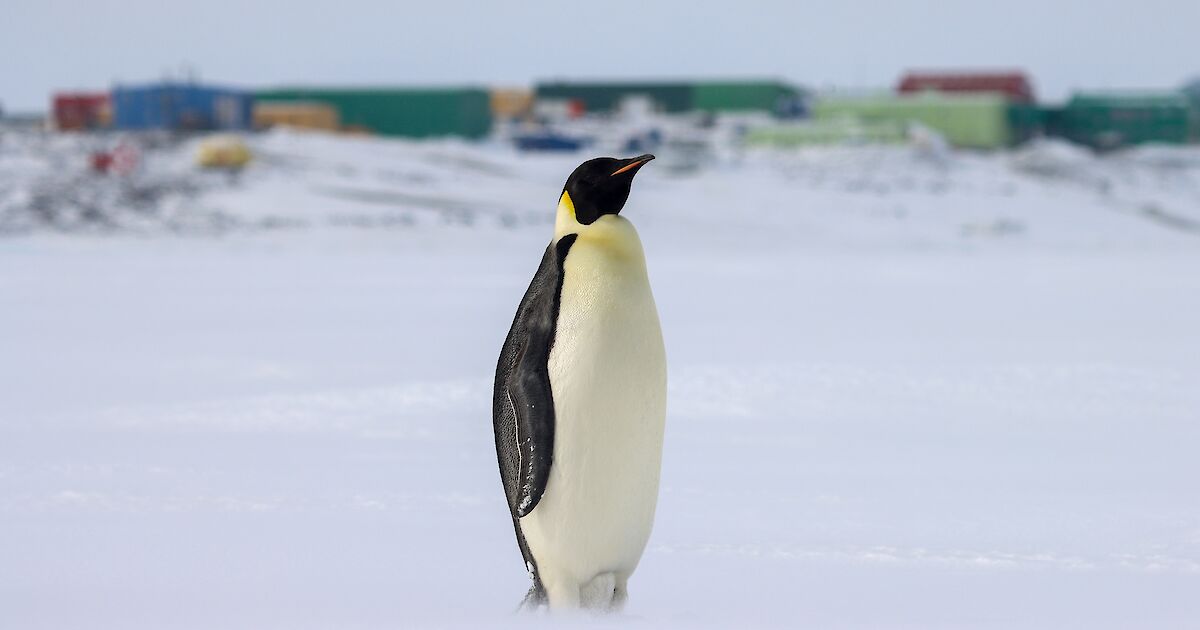
- Wildlife protection: Distance rules and noise mitigation to avoid disturbing local fauna, which includes emperor penguins and other species using the Davis region;
- Care for terrestrial communities: Protection of sensitive soils, mosses, and lichens near the station;
- Remediation activities: Restoration of areas impacted by pipeline and cable replacement works.
The complexity of the project requires multi-sector cooperation. The Antarctic Infrastructure Renewal Program (AIRP) is designed and delivered by the Antarctic Infrastructure Renewal Alliance (AIR Alliance). It is a four-way partnership uniting the government and scientific expertise of the Australian Antarctic Division (AAD) with the technical capacity of three major private corporations: Bouygues Construction Australia, Mott MacDonald Australia, and Stantec Australia.