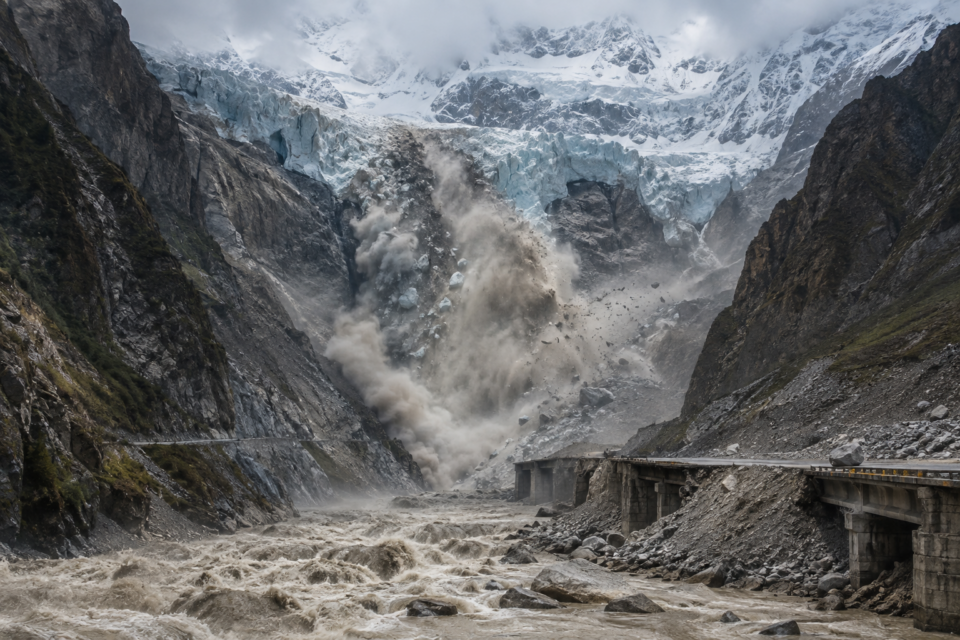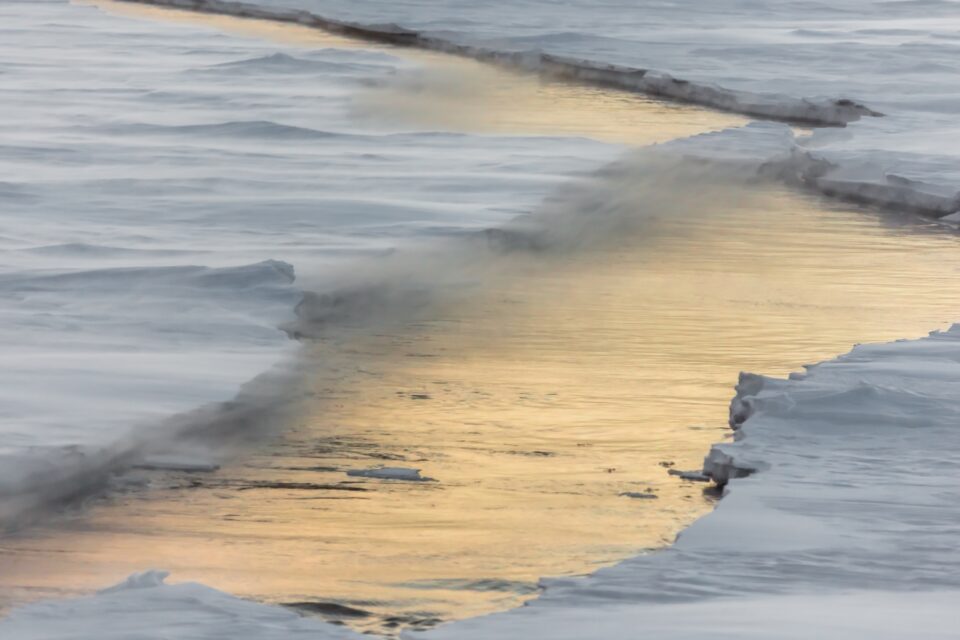

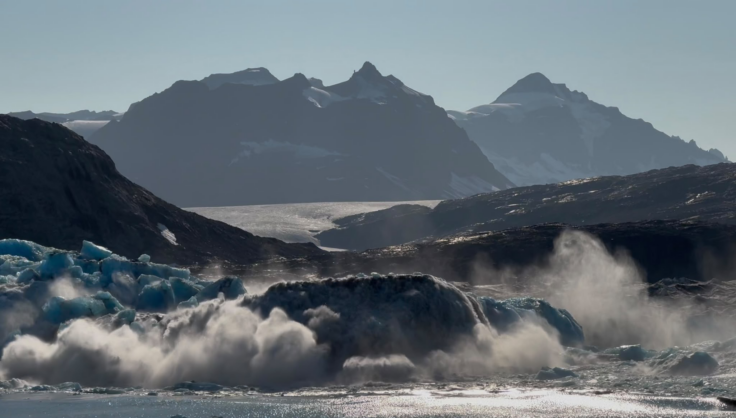
Scientists and crew members aboard the research vessel RRS Sir David Attenborough recorded a major calving event at the Sorgenfri Glacier in eastern Greenland. In just a few moments, a section approximately one kilometer wide and with an average thickness of one hundred meters detached from the glacial front and collapsed into the fjord.
Initial estimates indicate that around 18 million metric tons of ice were displaced. The ship was located more than a kilometer from the glacier front, and its crew assumed the safety position designated for this type of event.
A rapidly changing natural laboratory
The team is in the region as part of the GIANT scientific expedition, dedicated to understanding how Greenland’s glaciers interact with a warming ocean. Submarine melting and iceberg calving are key processes for glacial mass balance, but they are not yet represented with sufficient accuracy in many climate models.
Calving events are part of the natural behavior of ocean-terminating glaciers, especially during the summer. Therefore, recording an isolated episode should not be interpreted on its own as proof of a climate trend. The broader context, however, shows that the Greenland ice sheet has been losing mass and contributing to global sea level rise.
Why measure close to the ice wall
Much of the melting occurs below the waterline. Relatively warm currents enter the fjords, reach the base of the glacier, and alter its stability. To model this process, researchers need to measure temperature, salinity, circulation, and the geometry of the glacial front in areas where crewed vessels cannot safely remain.
The expedition uses a coordinated fleet of autonomous vehicles. Small submarines dive hundreds of meters and collect data near the ice-ocean interface. The fleet includes Gavia, EcoSubs, DriX, Meltstake, and the Autosub Long Range, known as Boaty McBoatface.
From spectacle to scientific data
Images of the calving event help document the scale and speed of the occurrence. The main objective, however, is to combine this record with continuous measurements. Underwater sensors allow researchers to observe how water circulates after the ice falls, how much heat reaches the glacier, and how the front reacts over time.
More detailed data could improve projections for Greenland and sea levels. They will also help scientists separate seasonal fluctuations, natural events, and persistent changes associated with ocean warming.
Source
British Antarctic Survey — Greenland science expedition witnesses huge glacier calving.
Featured image: Alice Fremand/British Antarctic Survey.