
Impact of avian influenza on remote ecosystems
Scientists from the Australian Antarctic Program (AAP) recently completed a detailed investigation into the presence of highly pathogenic avian influenza (H5N1, clade 2.3.4.4b) on the Heard and McDonald Islands, an external territory of Australia located in the Southern Ocean. The data, collected during expeditions conducted between October 2025 and January 2026, reveal a concerning scenario for local wildlife, with high mortality rates across several vertebrate species.
Confirmed facts and laboratory evidence
Laboratory analysis, conducted by the Australian Centre for Disease Preparedness (CSIRO), confirmed the presence of the virus in six of the nine species tested. Among the animals that tested positive for the H5N1 strain are the southern elephant seal, king penguin, gentoo penguin, Antarctic fur seal, and South Georgia diving petrel. Preliminary genetic analyses attribute the introduction of the virus to the region to wildlife movement from the Crozet Islands in France, with an estimated arrival in August 2025.
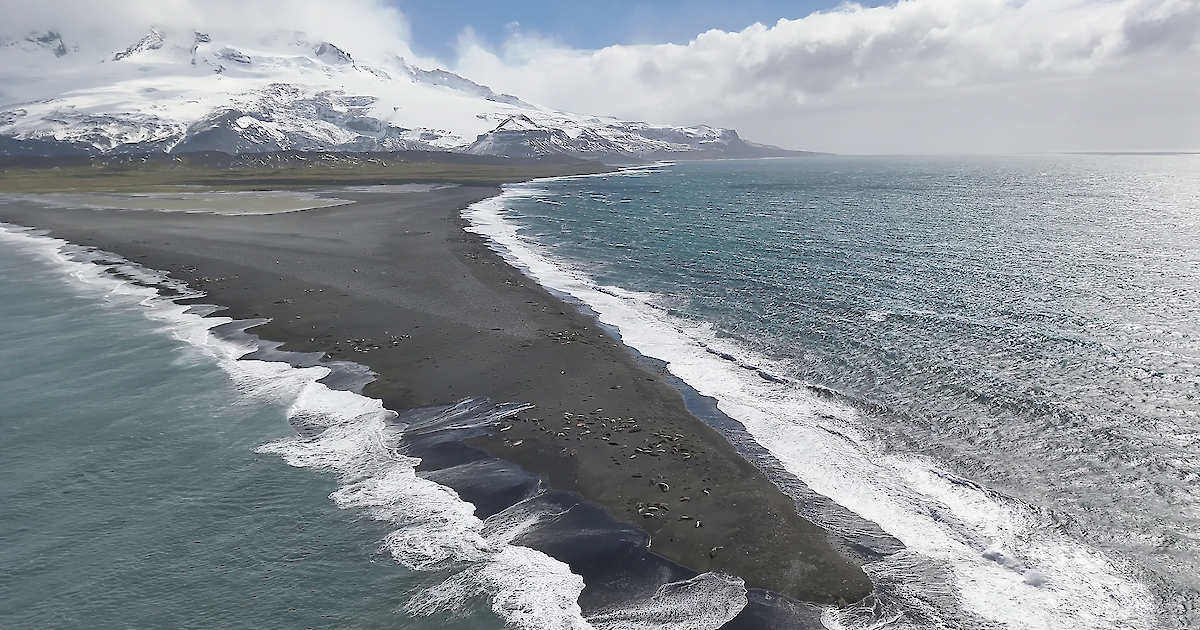
Drone monitoring was crucial for the survey. On Heard Island, estimates point to a mortality of approximately 13,000 elephant seal pups, representing about 76% of total pup production, with specific areas reaching peaks of 97% mortality. In January 2026, the presence of the virus was also detected on McDonald Island, although, due to protection status and access difficulties, it was not possible to conduct laboratory sampling on site for physical confirmation.
Observations and research limitations
In addition to elephant seals, hundreds of dead adult king penguins were observed. Although the number represents a smaller proportion of the total population, the mortality rate was considered above expected normal levels. On the other hand, no signs of unusual mortality were detected in species such as albatrosses, Heard Island shags, or black-faced sheathbills.
It is important to emphasize that the results presented by the team led by biologist Dr. Julie McInnes and Dr. Jarrod Hodgson have not yet undergone peer review, although a preprint is already available on the bioRxiv platform. The researchers emphasize that data were collected during short time windows, which limits understanding of the ongoing spread of the virus following the observation period. The Australian Antarctic Program continues to monitor the Australian Antarctic Territory and Macquarie Island, where, to date, no suspected cases have been recorded.
Technology serving conservation
The use of drones allowed scientists to conduct 120 flights, covering more than 1,600 km, in addition to ground searches spanning 300 km. This technology was essential to access inhospitable locations, such as cliffs and remote islands, minimizing human disturbance to breeding colonies and enabling accurate counts of carcasses scattered across high population density areas.